

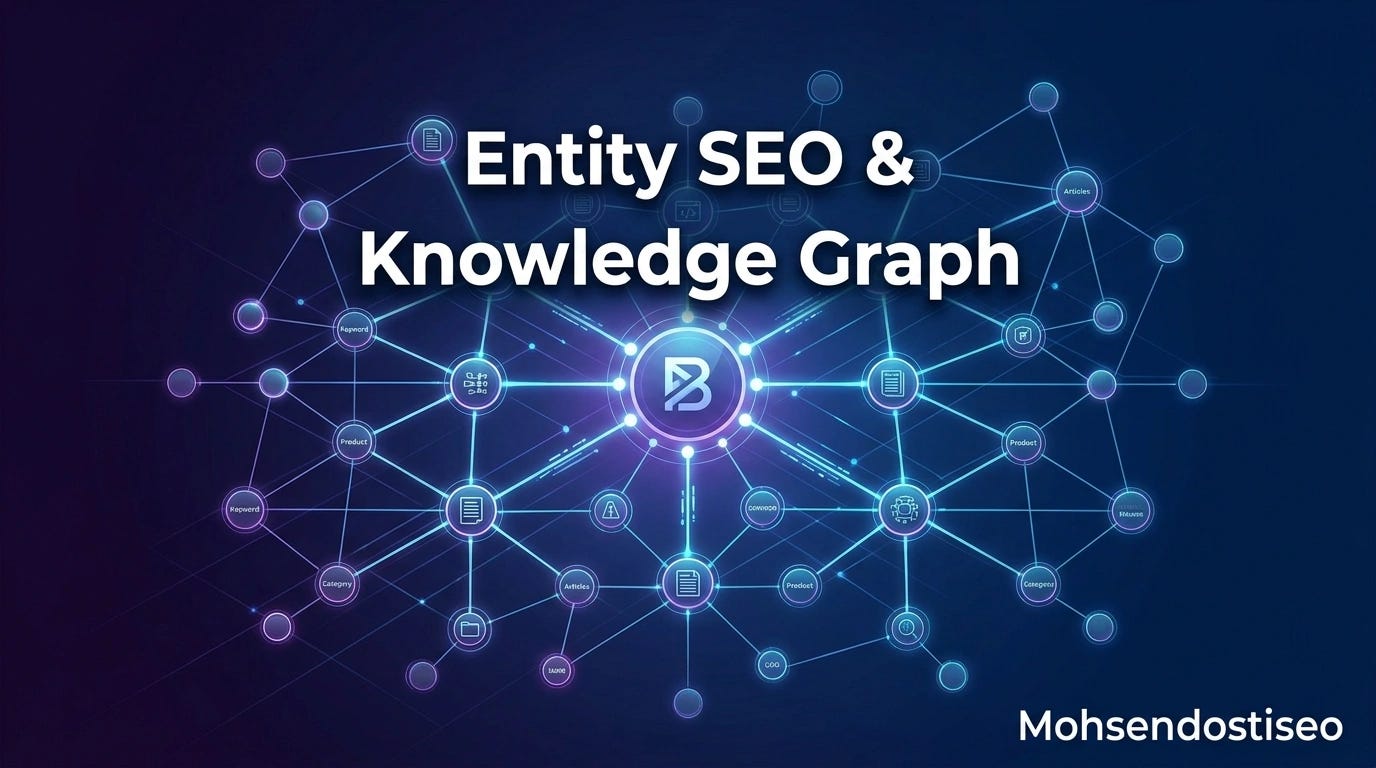
Over the past few years working in SEO, I’ve noticed a shift that many people still underestimate. Google is no longer just ranking pages. It’s increasingly organizing information around entities.
This change quietly affects how brands appear in search, how authority is built, and even how Google decides which source to trust.
In many SEO projects I’ve worked on, ranking improvements didn’t only come from content or links. Sometimes the real change happened when Google started to understand the brand itself as an entity.
That’s where Entity SEO becomes important.
In this article, I want to explain how Entity SEO works and how you can start building a knowledge graph footprint for your brand.
What Is an Entity in Google’s Understanding?
In simple terms, an entity is a uniquely identifiable thing.
It could be:
a person
a company
a product
a place
a concept
For example:
“Apple” as a fruit and “Apple” as a company are two completely different entities.
Google uses its Knowledge Graph to understand relationships between these entities. Instead of just matching keywords, it tries to answer questions like:
What is this thing?
What is it related to?
Who is behind it?
Which sources confirm its existence?
Once Google understands your brand as an entity, something interesting happens: your visibility becomes more stable and more contextual.
Your site is no longer just another webpage in the index. It becomes the reference node for that entity.
Why Entity SEO Matters More Than Traditional SEO
Traditional SEO focuses heavily on:
keywords
backlinks
on-page optimization
Those still matter. But Google’s understanding of the web is becoming more semantic and entity-driven.
When Google recognizes a brand entity, several things improve:
1. Brand SERP control
When someone searches your brand name, Google can show richer results:
knowledge panels
social profiles
related entities
articles about the brand
2. Stronger topical authority
If Google connects your entity to a specific topic cluster, your content in that area becomes more credible.
3. Better disambiguation
If your brand name is similar to other words or companies, entity recognition helps Google identify the correct one.
How Google Builds the Knowledge Graph
Google collects entity information from multiple sources.
Some of the most influential signals include:
authoritative websites
structured data (Schema.org)
Wikipedia / Wikidata
consistent mentions across the web
social profiles
knowledge databases
Think of the knowledge graph like a massive network of connected nodes.
Each entity is a node. Relationships between them create edges in the graph.
For example:
Mohsen Dosti → SEO Consultant
Mohsen Dosti → Writes about SEO
Mohsen Dosti → Associated with SEO articles
Mohsen Dosti → Appears on Substack
Over time, Google builds confidence that this entity exists and understands its context.
Step 1: Establish a Clear Entity Home
The first step in Entity SEO is creating what I call an Entity Home.
This is the page that most clearly represents the entity.
Usually it is:
the homepage of a brand
a personal profile page
an about page
This page should clearly answer:
Who is this entity?
What does it do?
What topics is it associated with?
For example, a personal entity page should clearly mention:
name
profession
expertise
related topics
external references
Clarity is important. Ambiguous pages make entity recognition harder.
Step 2: Use Structured Data to Define the Entity
Structured data helps search engines understand entities explicitly.
For personal branding, the Person schema is often useful.
For companies, Organization schema works well.
Example structure:
name
sameAs links
job title
description
social profiles
The sameAs property is particularly important.
It tells Google that multiple URLs refer to the same entity.
Example:
Your website
Your Substack profile
Your LinkedIn
Your Twitter
All connected as one identity.
Step 3: Build Consistent Entity References Across the Web
One pattern I often see during SEO audits is inconsistent entity signals.
For example:
different name formats
missing profiles
disconnected mentions
Google builds entity confidence through consistency.
If the same entity appears across many trusted platforms with similar information, the signal becomes stronger.
Examples of strong entity confirmation sources:
LinkedIn
Medium / Substack
industry publications
podcasts
interviews
conference pages
The goal is not just links. It’s recognition of the entity.
Step 4: Strengthen Topical Associations
Entities are not only defined by identity. They are also defined by topics.
Google learns what an entity is associated with based on content and context.
For example:
If someone consistently publishes content about:
SEO strategy
technical SEO
search algorithms
Google gradually connects that person with the SEO entity cluster.
This is where topical authority and entity SEO overlap.
The more high-quality content you publish within a topic ecosystem, the stronger your entity association becomes.
Step 5: Build an Entity Network
Entities rarely exist alone.
They are part of a network.
For example:
Person → Company
Person → Topic
Company → Product
Company → Industry
In practice, this means connecting your brand entity to other recognized entities.
Examples include:
tools you use
companies you worked with
industries you write about
well-known concepts in your niche
This creates a semantic context around your brand.
Google starts to understand not only who you are, but where you fit in the broader ecosystem.
Brand SERP: The Public Face of Your Entity
One of the easiest ways to see entity SEO in action is by looking at Brand SERPs.
Search your name or brand and observe:
knowledge panels
social profile links
related searches
entity cards
If the results are messy or incomplete, Google likely has weak entity confidence.
Strong entities usually produce clean, structured brand SERPs.
That’s a good indicator that the knowledge graph understands the brand.
A Common Mistake in Entity SEO
A mistake I often see is trying to force entity signals artificially.
For example:
spammy profile creation
low-quality mentions
random directory submissions
These rarely help.
Entity SEO is closer to digital reputation building than traditional link building.
The signals that matter most usually come from:
credible mentions
expert content
consistent identity signals
In other words, Google needs enough evidence to believe the entity is real and relevant.
The Long-Term Value of Entity SEO
Entity SEO is not a quick trick.
It’s a long-term positioning strategy.
But once it works, it creates advantages that are difficult for competitors to replicate.
A strong entity often leads to:
stronger brand SERPs
higher trust signals
improved topical authority
more stable rankings over time
In my experience, the websites and professionals who focus on building recognizable entities tend to perform better in the long run.
Not because they optimized more keywords.
But because Google understands who they are.
And in modern search, that understanding matters more than ever.